Proportions
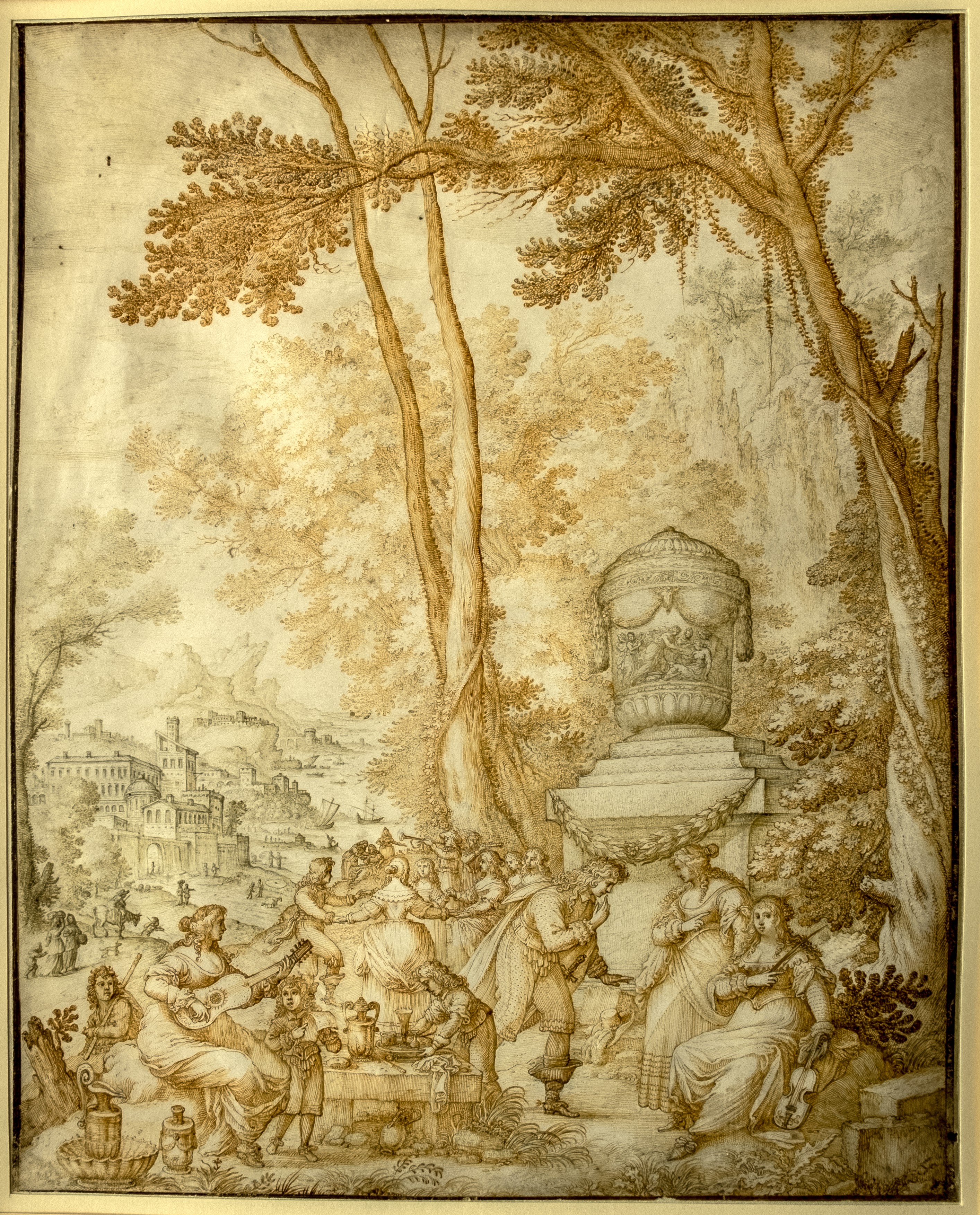
Il Cacciatore. Preparation for the hunt.
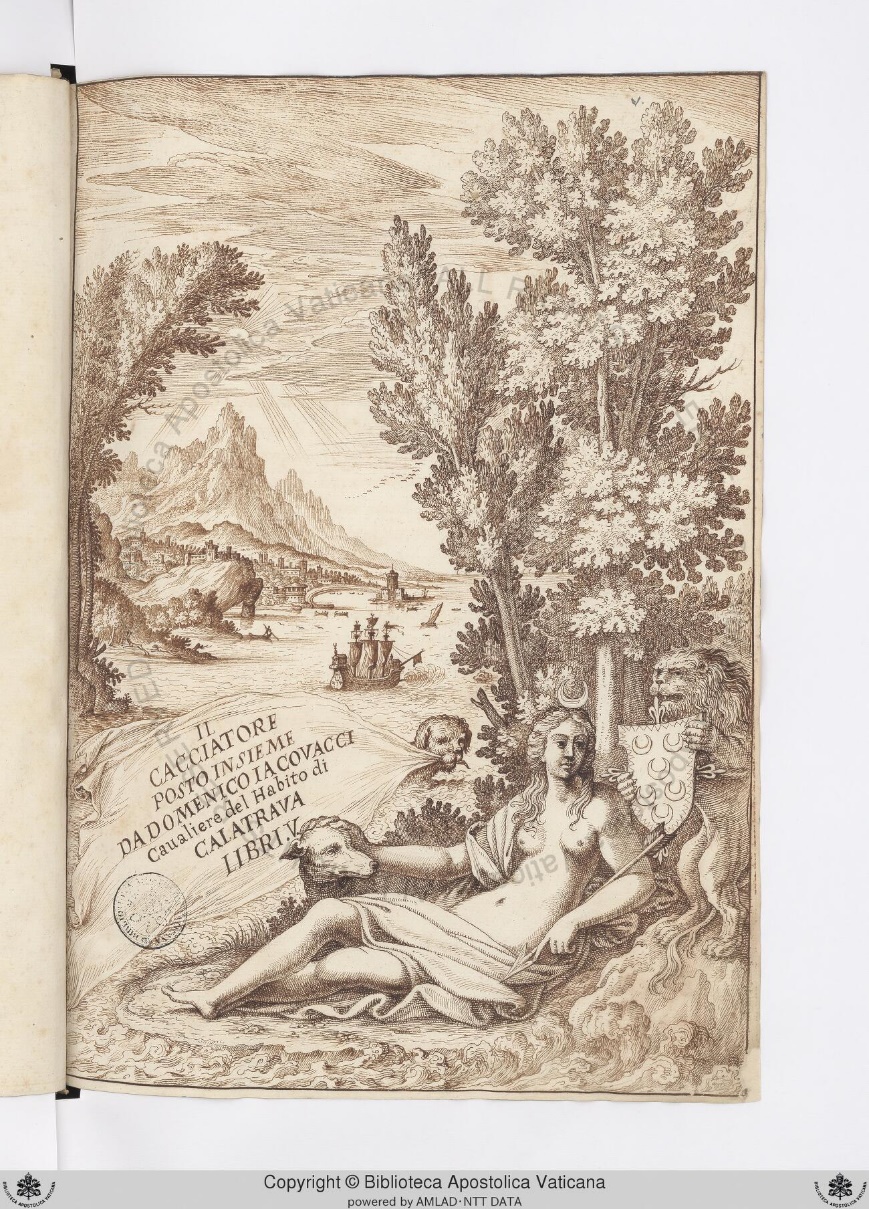
IL CACCIATORE POSTO INSIEMEDA DOMENICO IACOVACCI Cavaliere del Habito di CALATRAVA LIBRI V
| Catalogue ID | 1.36c |
|---|---|
| Artist | Domenico Jacovacci (1604-1661); Master of the Roman Songbook (1650-1660) |
| Object type | drawing |
| Date | [1648?] |
| Place | Rome |
| Collection | Biblioteca Apostolica Vaticana (Rome) |
| Inv. no. | I-RVat Ott.lat.1460, 1 ter |
| Tech. / support | brown ink, chalk, graphite, paper, pen |
| Measures | 375 × 520 mm |
| Subject | 25H15 — forest, wood 34B11 — dog 43C11 — hunting, chase 46C131 — riding a horse, ass, or mule; rider, horseman |
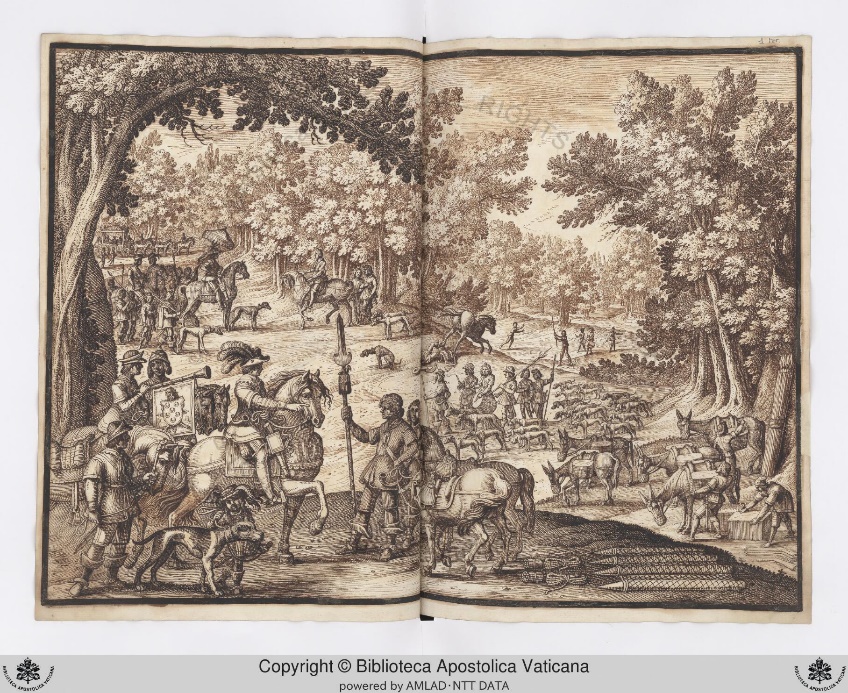
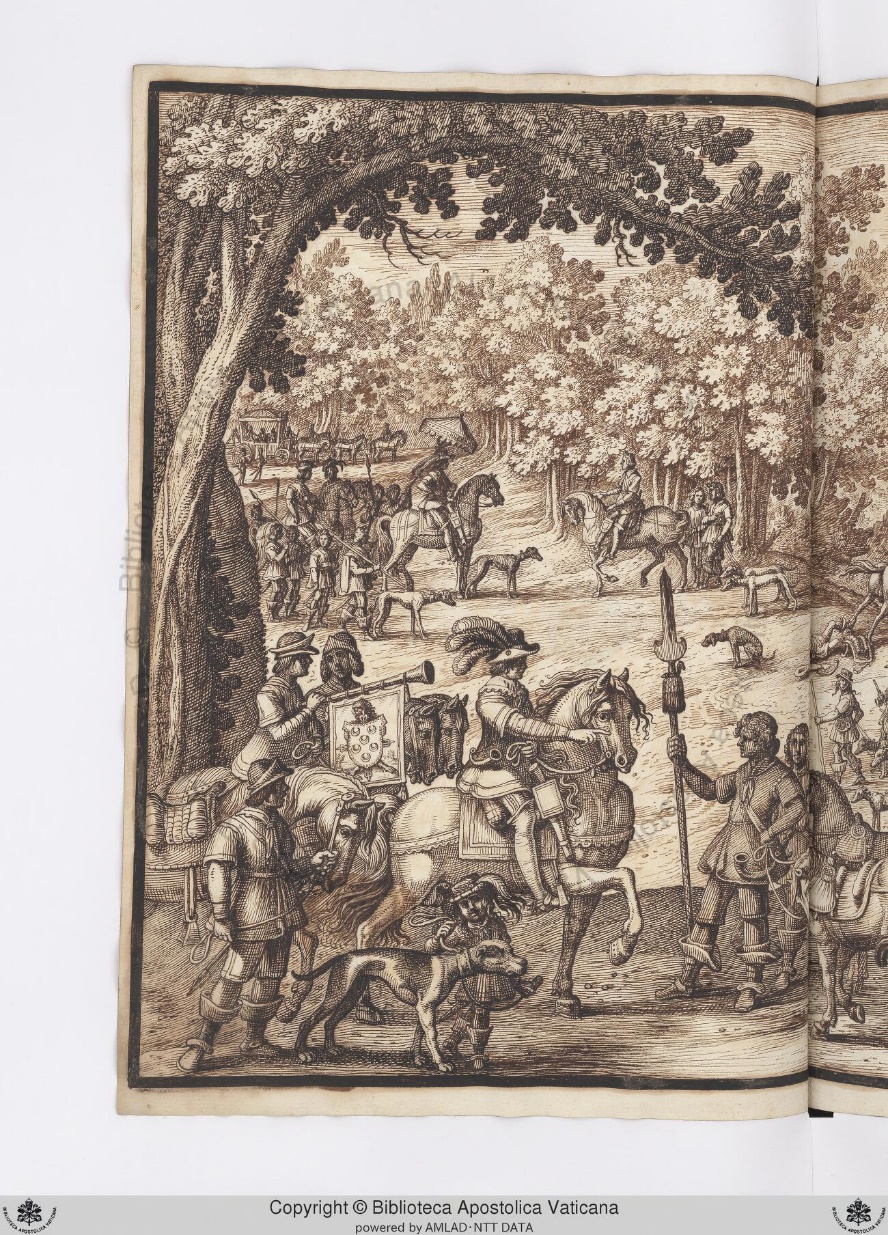
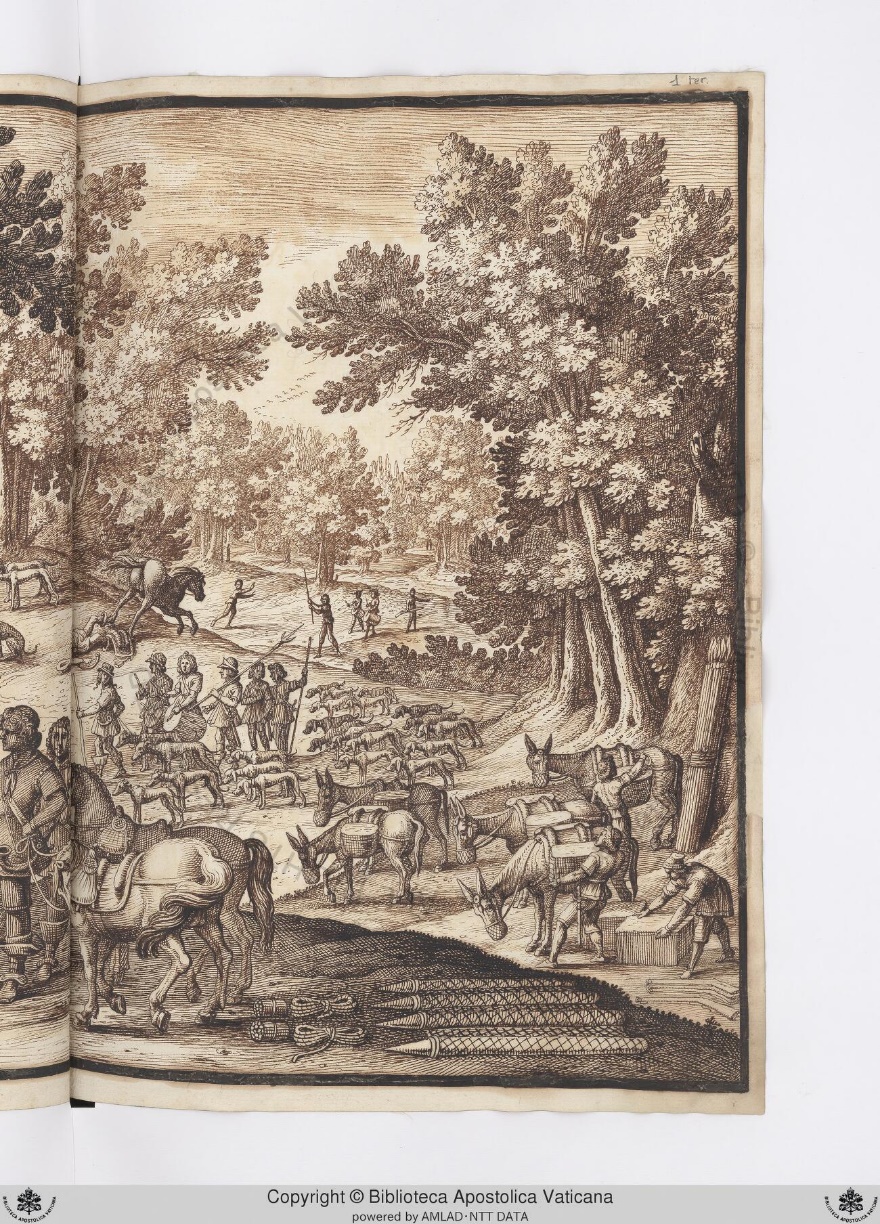
The drawing is strikingly meticulous, both in its construction and in the precision of its final execution. It is evident that the artist devoted considerable time to composing the scene, which unfolds in clearly articulated narrative segments. This segmented structure suggests that the composition may have been developed progressively, by assembling discrete figure groups. The setting is a clearing framed by dense trees. The foliage is rendered—characteristically—through a combination of blank spaces and increasingly darkened ink washes, producing a sense of depth and overlapping branches. In the left background, a six-horse carriage appears in the distance, its occupants barely sketched. Closer to the foreground, still on the left, two noblemen are shown meeting on horseback. Each is attended by pages on foot, grooms bearing lances, and hunting dogs—some leashed, others wearing only collars. One of the noblemen is shaded by a parasol held by a servant. These groups of figures recur throughout the composition, but each repetition shows them from a different angle and engaged in varying postures or conversation. In the immediate foreground, a third nobleman on horseback—distinguished by a feathered hat—is seen instructing the head huntsman, who holds two bridled steeds and a long lance. This mounted figure, likely a self-portrait of Jacovacci, is followed by a trumpeter whose instrument bears a banner emblazoned with the family coat of arms. In the lower foreground, a child restrains his dog on a leash. The nobleman’s horse is finely ornamented and gazes directly at the viewer, adding to the illusion of immediacy and realism.Hunting tools such as netting poles are scattered on the ground. To the right, servants prepare firearms and load pack mules—fitted with feeding muzzles—with large containers for transporting equipment. Though plainly dressed, these men wear swords and display a robust, capable physique. At the centre of the clearing, a pack of hunting dogs gathers around a page with a horn strapped to his waist, followed by others carrying side drums. Notably, one dog is depicted defecating in the exact centre of the scene, while a spooked horse has just thrown a page who was holding a hunting horn—a mishap likely caused by the page’s failure to secure the saddle correctly, an error explicitly warned against in the same hunting manual. In the far-right background, a river winds its way through the landscape. From its banks, two drummers emerge, while a fleeing page seeks shelter from the approaching runaway horse. Technically, the foreground is rendered in a deep, dark brown ink, nearly black. For certain isolated elements—such as the firearms laid on the ground—a darker black ink is employed. The background, in contrast, is executed in a paler brown. Wash-like effects, such as the stain on the lower-left horse and areas of the sky, appear unintentional and are likely the result of how the lighter ink spread into the paper fibers.
No musical work linked.
Bianco, Anna. Images for the Music: Drawings and secular cantatas. Ph.D. dissertation, Leiden University, 2025
Guerrieri Borsoi, Maria Barbara. Domenico Jacovacci: collezionista e maestro delle strade nella Roma berniniana. Gangemi, 2017. (p. 27)
Guerrieri Borsoi, Maria Barbara. “La Decorazione Dei Manoscritti Di Domenico Jacovacci Nel Fondo Ottoboniano Latino Della Biblioteca Apostolica Vaticana.” Miscellanea Bibliothecae Apostolicae Vaticanae, vol. XXII, 2015, pp. 373-431. (p. 419)
Biblioteca Apostolica Vaticana
current
View this object in the collection’s online catalogue →